The 5 Tile Decisions That Matter More Than the Tile Itself
Posted by That Tile Lady on Feb 7th 2026
The 5 Tile Decisions That Matter More Than the Tile Itself
Here’s something I wish more people knew before they started shopping for tile:
Two people can choose the exact same tile and end up with completely different results.
One space feels thoughtful and elevated.
The other feels… off. Not terrible. Just not quite right.
And it’s almost never because the tile itself was wrong.
What actually makes the difference are the decisions that happen around the tile — the ones most people don’t realize they’re making until it’s too late to change them.
When clients come to us frustrated, it’s rarely “I picked the wrong color.”
It’s usually something quieter: the grout feels too busy, the tile scale overwhelms the room, or the finish doesn’t look the way it did online.
That’s why I always say tile selection is less about the tile and more about how it’s used.
Let me explain.
Grout Is Not a Background Character
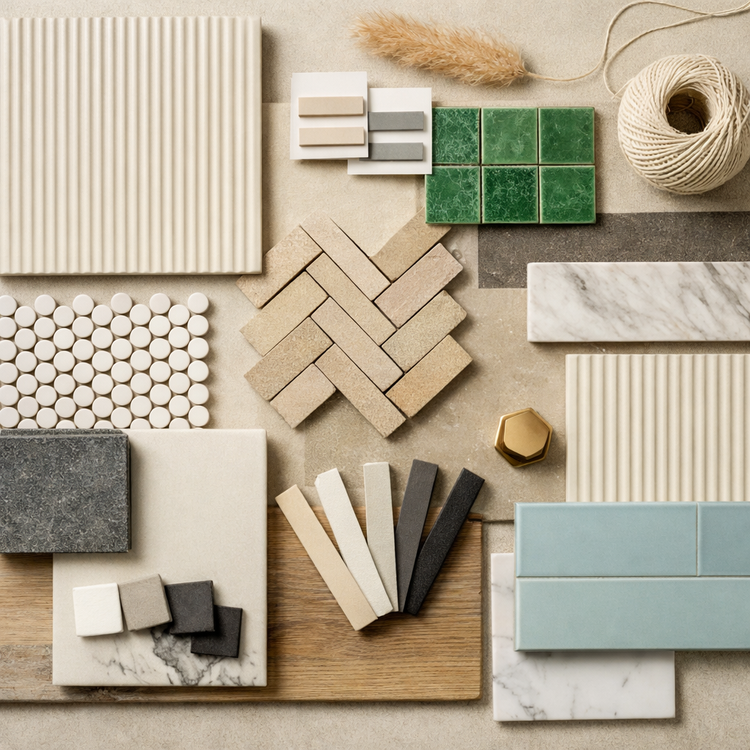
Grout has a huge impact on how tile reads in a space — especially with small format or textured tile.
Take something like our Mini Bianco or Mini Avorio. These tiles are intentionally subtle, tactile, and dimensional. With a soft, tone-on-tone grout, they feel calm and architectural. With a high-contrast grout, they suddenly become graphic and busy — which might be perfect for one space and totally wrong for another.
The same thing happens with ribbed or fluted tiles like Canneté. The grout can either let the texture shine or fight it.
This is where I see people go wrong most often: choosing grout from a tiny sample board, under store lighting, without ever seeing it next to the tile in their actual space. Grout should be chosen with the tile, not after it.
Bigger Isn’t Always Better (Even Though Instagram Says It Is)
Large format tile is everywhere right now, and for good reason. In the right space, something like New Classic 24x48 or Nobu White 20x48 looks clean, expansive, and timeless.
But scale still matters.
I’ve seen oversized tiles squeezed into small bathrooms where cuts land awkwardly, and I’ve seen tiny tiles stretched across large rooms where the floor ends up feeling visually noisy.
What matters isn’t the trend — it’s proportion.
Before committing to a size, I always encourage people to think about where full tiles will land, how many cuts they’ll see when they walk into the room, and whether the scale actually complements the space instead of competing with it.
Layout Is Where Design Actually Happens
This one surprises people.
You can take the same exact tile and make it feel modern, traditional, or totally custom just by changing the layout.
Our Soho + Noho collection is a perfect example. Installed in a standard brick pattern, it feels classic. Installed vertically in a stacked layout, it suddenly feels tailored and architectural. Same tile — completely different outcome.
The same goes for parquet-look tiles like Vintage or linear mosaics like Nobu Sticks. Layout controls movement, rhythm, and how your eye travels through the space. It’s often the difference between “nice tile” and “wow, that feels designed.”
Finish Is About Real Life, Not Just Looks
Finish is one of those things that’s almost impossible to judge online.
A tile that photographs beautifully can feel too shiny, too flat, or too slick once it’s installed. Honed and matte finishes tend to absorb light and feel softer and warmer in real life. Polished finishes reflect light and feel more dramatic — but also show more.
Textured tiles, especially 3D surfaces like Homey Stripes or ribbed designs, really need to be seen in person. Photos don’t capture how they interact with light or how they feel when you’re standing next to them.
This is one of the biggest reasons we always encourage samples. You can’t feel a finish through a screen.
Lighting Changes Everything (And No One Talks About It)
Tile doesn’t live under showroom lighting.
It lives in morning sun, evening shadows, warm LEDs, and overhead cans. The same tile can look creamy at noon and gray at night. Texture can disappear in flat lighting or come alive when light hits it from the side.
This is why reviewing samples in the actual space — at different times of day — matters so much. Lighting is the silent decision that influences every other one.
The Big Picture
Choosing tile isn’t just choosing tile.
It’s grout.
It’s scale.
It’s layout.
It’s finish.
It’s lighting.
When those pieces work together, almost any tile can look intentional and elevated. When they don’t, even the most beautiful tile can fall flat.
That’s why we always encourage slowing down at the beginning. These decisions are much easier — and much cheaper — to make before installation.
If you’re unsure where to start, samples are the smartest first step. Seeing tile in your space changes everything.