The Tile Details That Quietly Make a Home Look Expensive
Some of the most expensive-looking homes aren’t actually using the most expensive materials.
A lot of the time, the difference comes down to smaller decisions most people don’t think about — scale, texture, grout color, layout, and how materials flow from one space into the next.
We see this constantly in tile. Two bathrooms can use almost the same colors, but one feels calm, custom, and designer-driven… while the other somehow still feels builder grade.
Usually, it’s not about doing more.
It’s about choosing the right details.
Here are a few of the tile choices that quietly make a home feel far more elevated.
1. Large Format Tile Instantly Feels More Custom
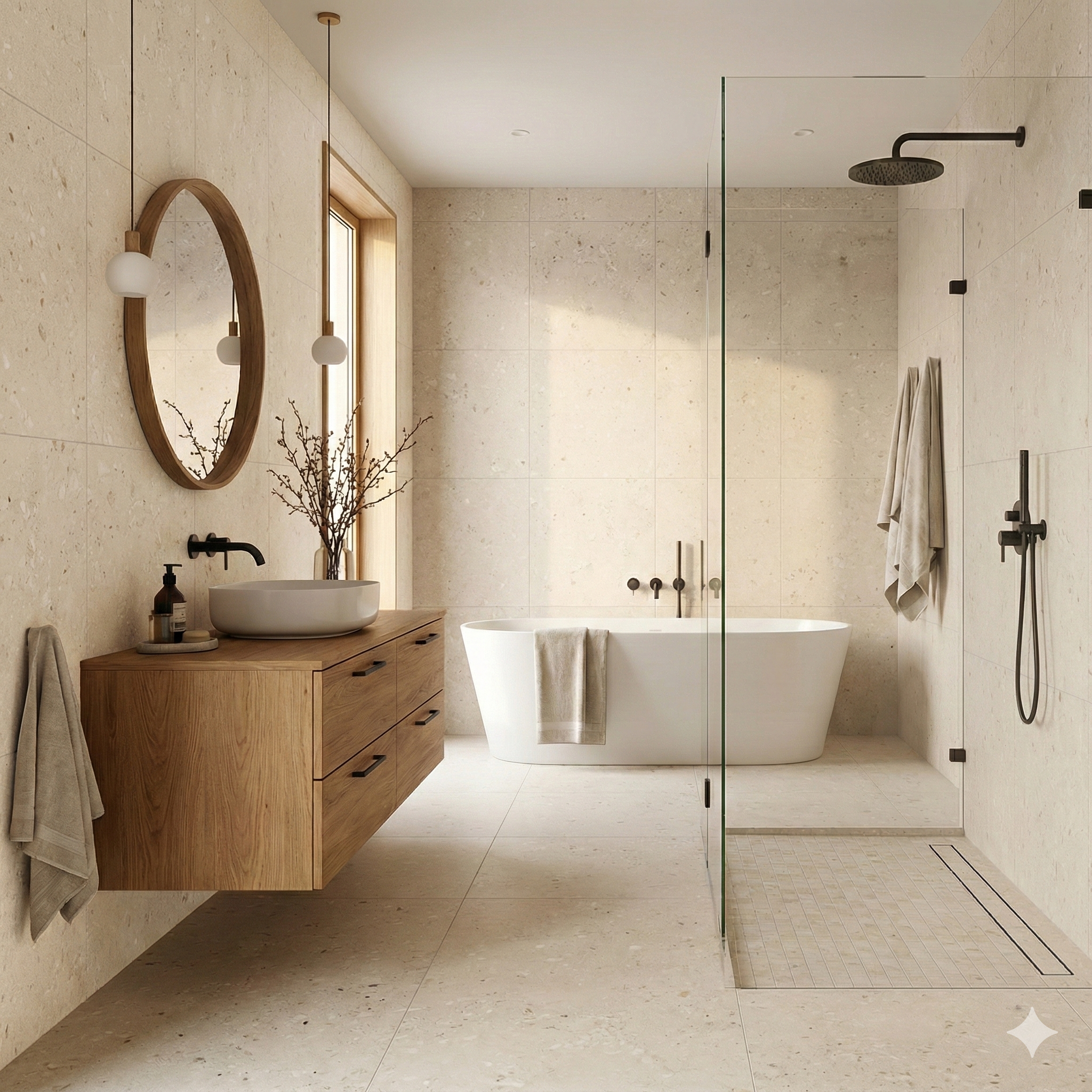
One of the easiest ways to make a space feel more high-end is surprisingly simple: use larger tile.
Large format porcelain naturally creates fewer grout lines, which makes a room feel cleaner, calmer, and more architectural overall.
This is especially true in:
- bathrooms
- shower walls
- open living spaces
- fireplace surrounds
We’ve had customers completely change the feel of a project just by moving from a smaller format into something like a 24x48 or 36x36.
It’s one of those details people don’t always notice immediately — but they absolutely feel it when they walk into the room.
2. Tone-on-Tone Spaces Usually Feel More Expensive
One thing designers have been moving away from lately is overly harsh contrast.
Instead of bright white marble looks paired with dark grout and dramatic veining everywhere, we’re seeing more layered, tonal spaces built around:
- warm creams
- sandy beiges
- soft stone looks
- muted mineral tones
- natural textures
Ironically, quieter spaces often feel more luxurious.
That doesn’t mean everything has to perfectly match. In fact, the best spaces usually don’t. But when the tones relate to each other naturally, the room feels more intentional and less visually chaotic.
This is a big reason warm travertine looks and softer stone-inspired porcelain have become so popular recently. They add movement and depth without screaming for attention.
3. Texture Is Replacing Pattern
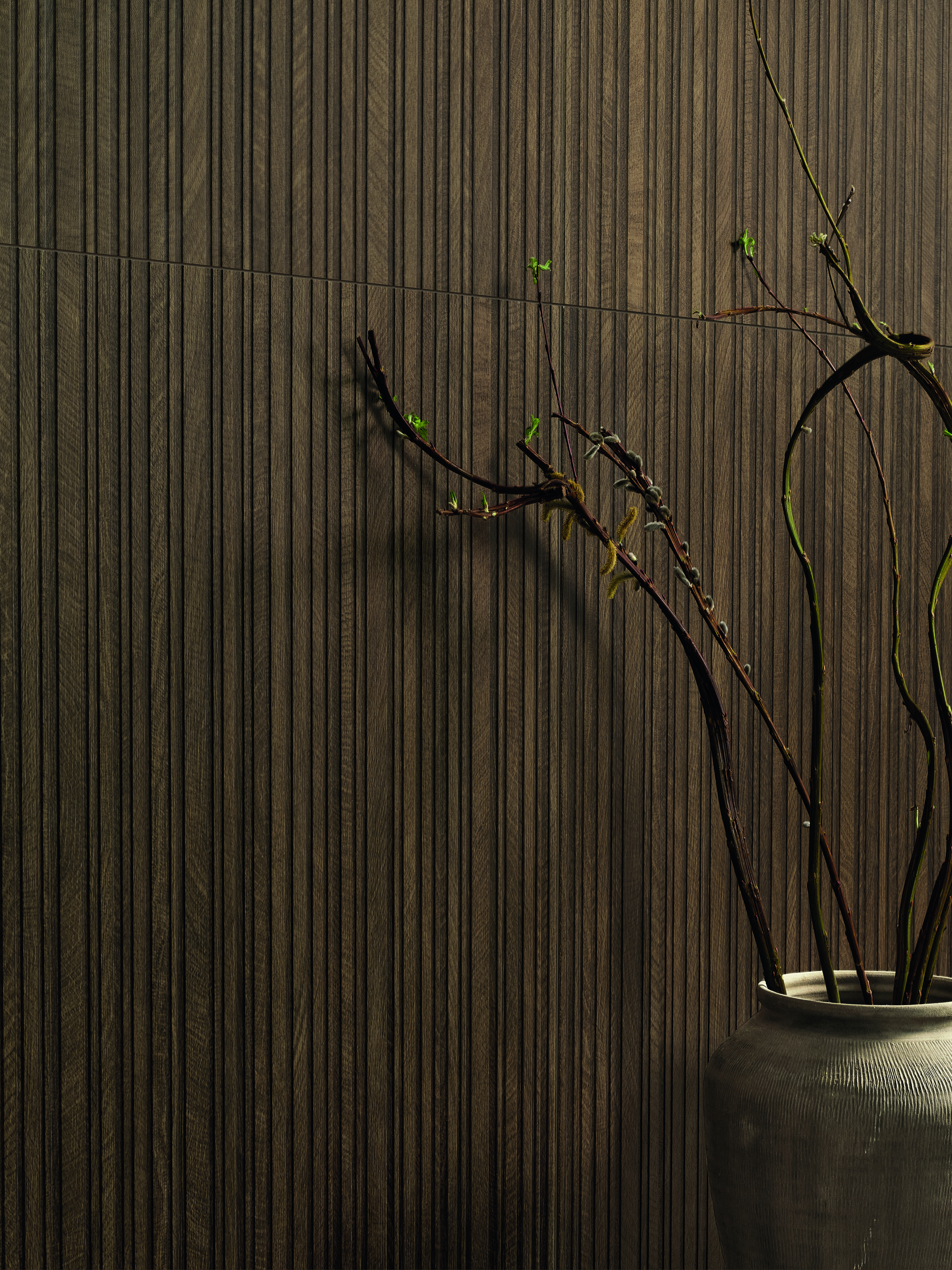
One of the biggest shifts we’ve noticed lately is that designers are using texture instead of bold pattern to create interest.
Fluted tile, ribbed surfaces, handcrafted edges, and subtle dimensional details bring a space to life without making it feel overly trendy.
And honestly, texture tends to age better too.
Natural light hits textured surfaces differently throughout the day, which gives the room movement and depth even when the color palette stays neutral.
Some of our favorite applications for textured tile are:
- powder room accent walls
- fireplace surrounds
- shower walls
- kitchen backsplashes
- spa-inspired bathrooms
It’s subtle, but it completely changes the personality of a space.
4. Grout Color Matters Way More Than People Think
This might be one of the most overlooked details in tile.
Grout can completely change the final look of an installation.
A strong contrast grout will highlight every individual tile. Sometimes that’s intentional. But in a lot of spaces, especially with large format or stone-look porcelain, it can end up making the installation feel busier than expected.
Most designers tend to lean toward grout colors that blend more naturally into the tile itself. The overall look ends up softer, cleaner, and more seamless.
The grout joint size matters too. Narrow joints paired with rectified porcelain usually feel much more refined than oversized grout lines.
Small detail. Huge difference.
5. The Best Spaces Usually Don’t Try Too Hard
One thing we’ve learned from seeing thousands of installations is this:
The most beautiful spaces are usually the most restrained.
A lot of builder-grade interiors make the mistake of introducing a completely different material in every room. Different floor tile, different shower tile, different accent tile, different backsplash — all competing for attention.
The spaces that feel truly custom usually have more continuity.
Maybe the flooring carries throughout the home. Maybe the bathroom repeats the same warm tones from the kitchen. Maybe there’s one statement wall surrounded by quieter materials.
There’s a confidence to spaces that don’t feel the need to over-explain themselves.
Final Thoughts
Beautiful tile matters. But the details surrounding it are often what make a home actually feel elevated.
Scale, texture, grout color, and material flow might seem subtle on their own, but together they completely change how a space feels.
And honestly, that’s usually the difference between a room that simply looks finished… and one that feels professionally designed.